Aquaponics Pictures
|
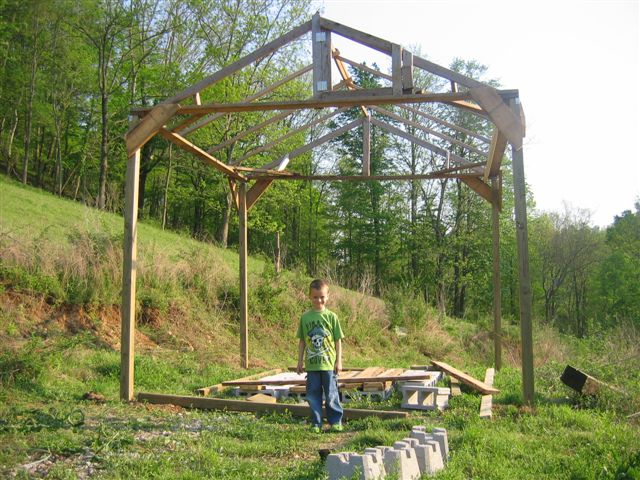
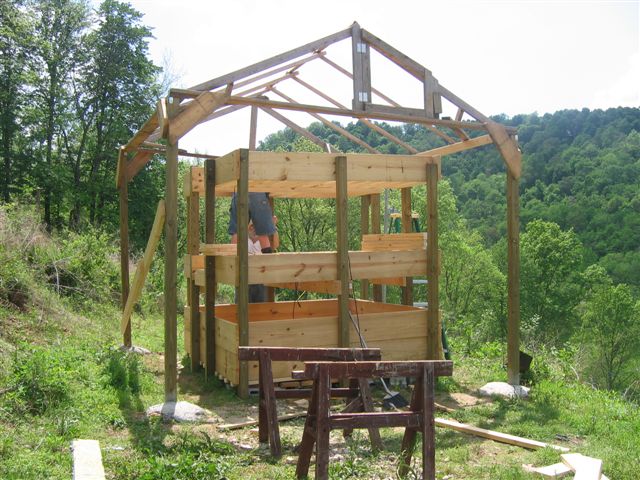
Isaac in 2011 (6 years old) in front of the proposed Aquaponics greenhouse. We took our first moveable chicken coop (which was too heavy to move) and made it into the roof.
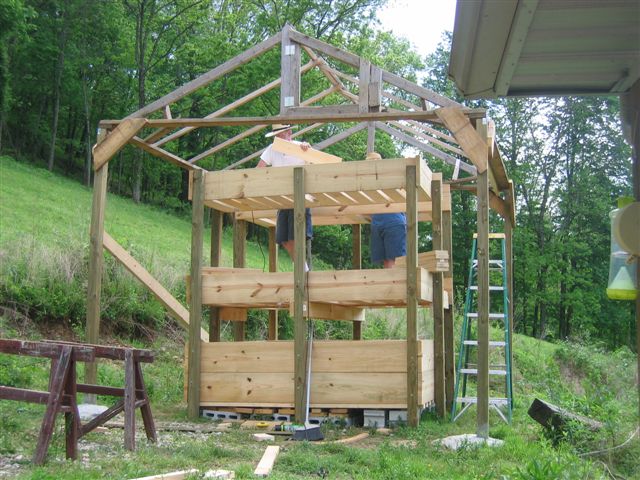
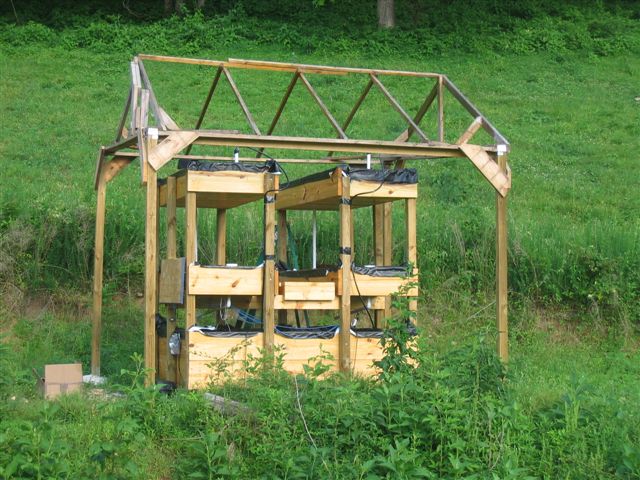
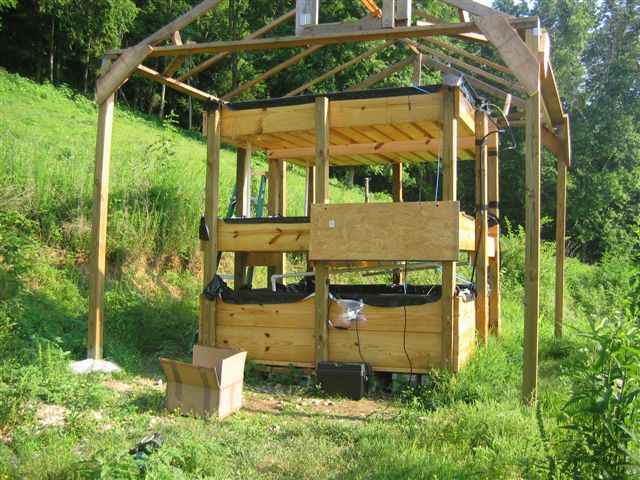
Aquaponics structure design. I built 4 media beds, two on each side above a wooden square fish tank that I covered with a rubber liner.
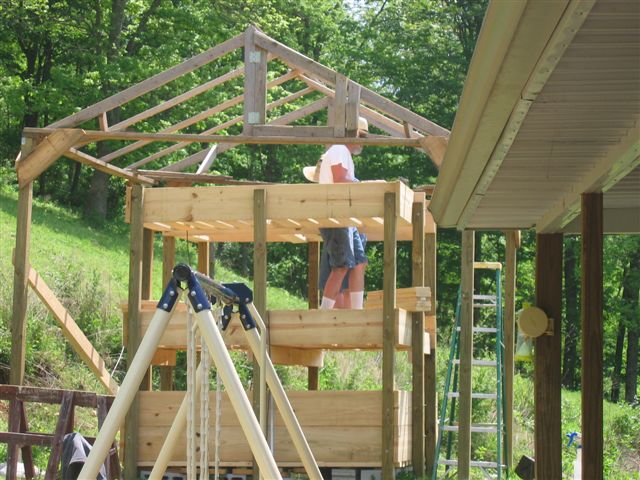
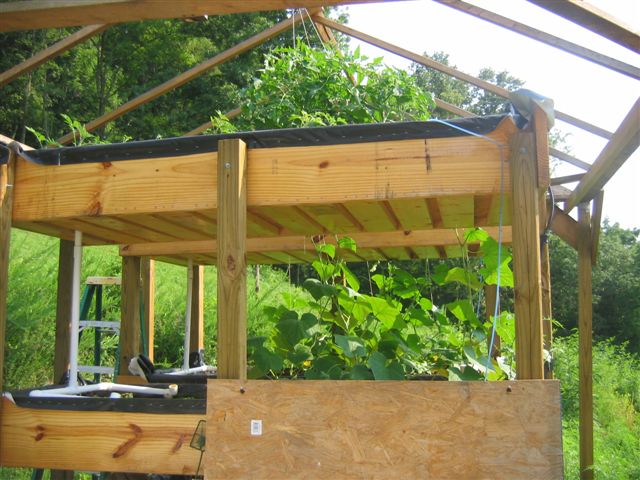
There is a walkway suspended over the fish tank to allow access to the two media beds on top.
This angle shows the 4 media beds over the fish tank.
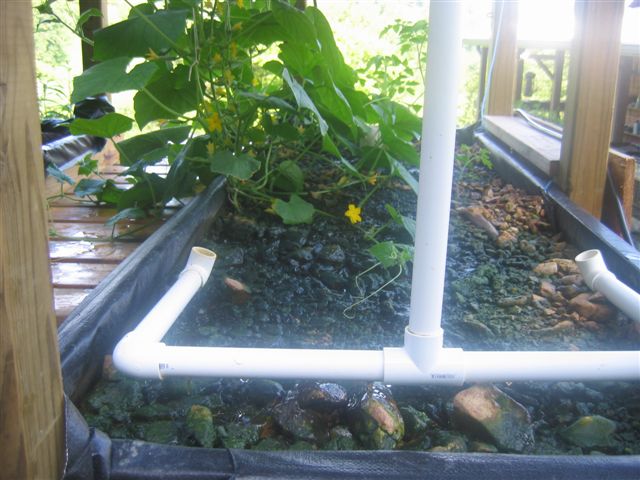
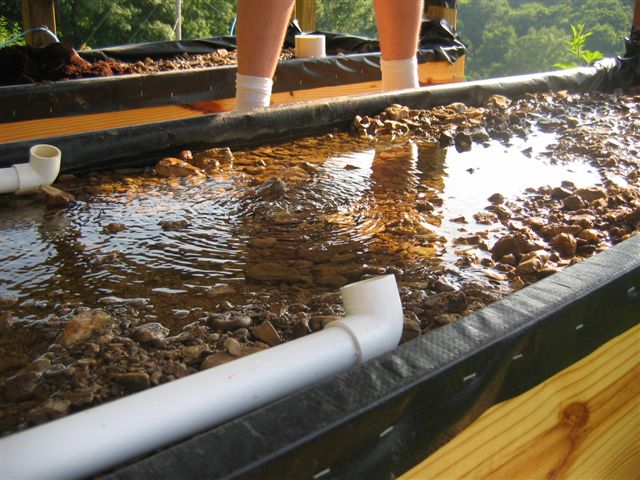
The media beds were lined with a rubber liner and filled with river gravel.
Media bed construction complete. The plywood board covers the air compressors that provide air to the fish tank.
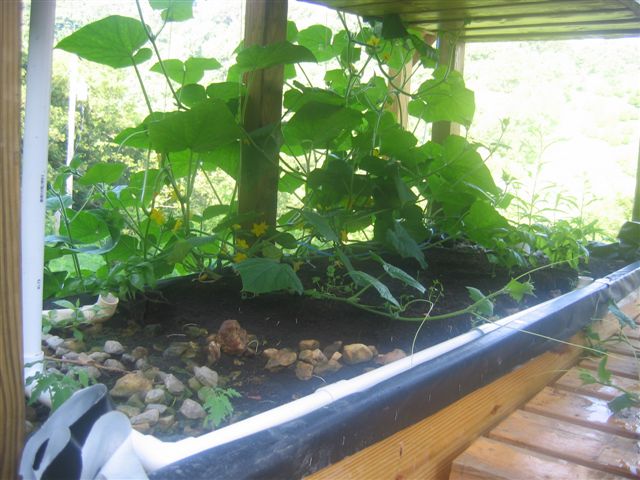
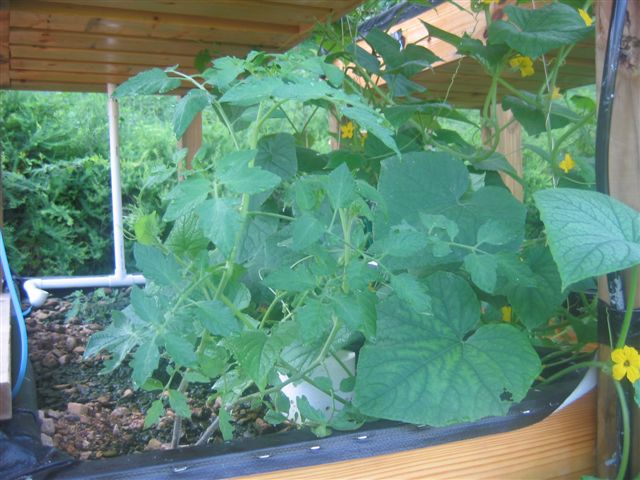
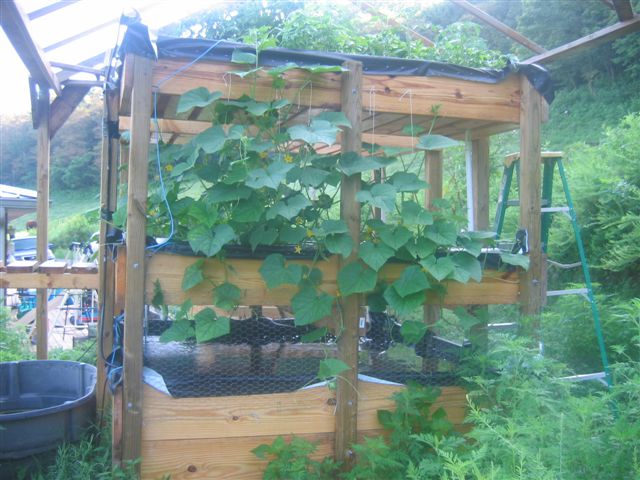
Cucumbers growing like crazy.
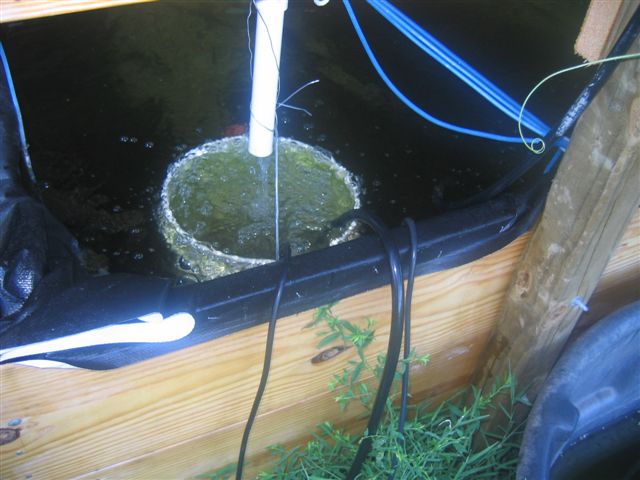
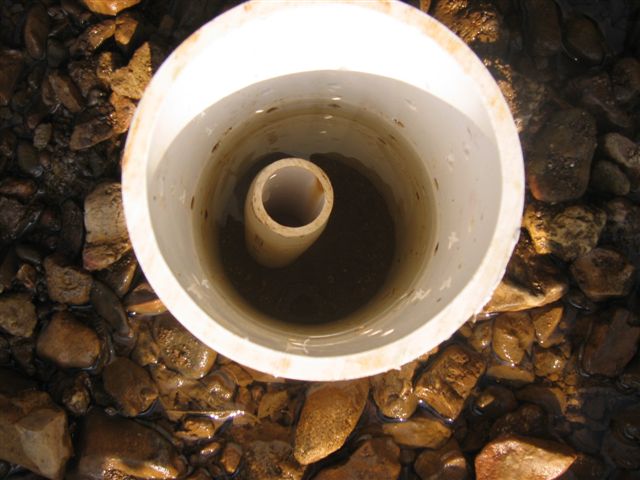
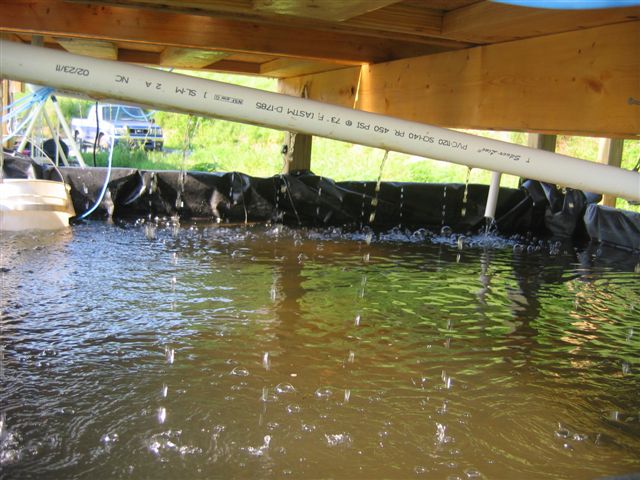
The water from the media beds flows down through this return pipe into a submerged bucket that holds the submersible water pumps. The bucket keeps the fish and their poop away from the pumps.
The 1" PVC return pipe is surrounded by a 4" perforated pipe that keeps the gravel from clogging the return pipe. The height of the return pipe is short enough to keep the water from overflowing the edges of the media beds. The return pipe has holes drilled along the side to let the water slowly drain back into the fish tank.
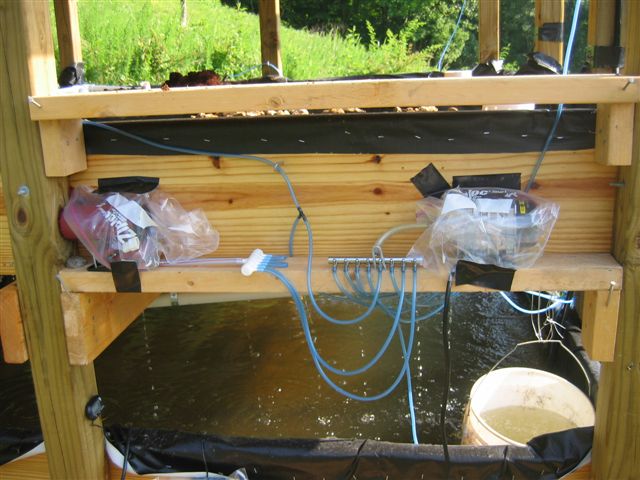
Two air pumps power the same manifold to the submerged air stones, one is AC, the other is DC powered by a marine battery. There is a relay switch that is held open by the power from a cell phone charger. When the AC power fails due to a storm, etc. the relay switch closes and the DC air pump automatically turns on to pump air so the fish can survive.
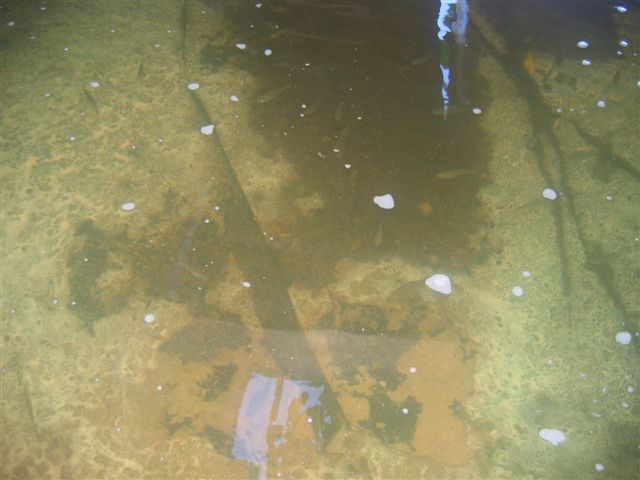
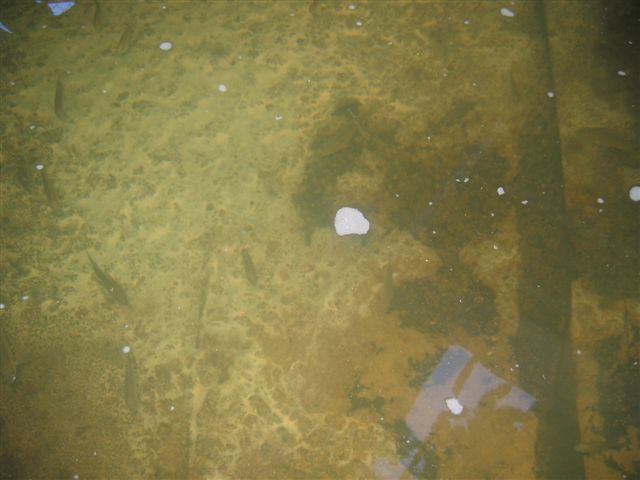
Fish in the wooden tank. You can see a fold in the black rubber liner at the bottom.
At night we would turn on a light above the tank to attract bugs. The fish would swarm after the bug even before it fell into the water. When a moth or insect fell into the water, one fish would grab it and swim as fast as possible, and the rest of the fish would try to take it away, just like chickens.
A return pipe with holes to let the water drip into the fish tank for aeration.
The water from the top media beds would come into the lower beds through these pipes. There were holes drilled along the bottom of the pipes. This media bed is entirely made of river gravel.
We covered this media bed with cocoa peat. Cucumbers love it!
More cucumbers!
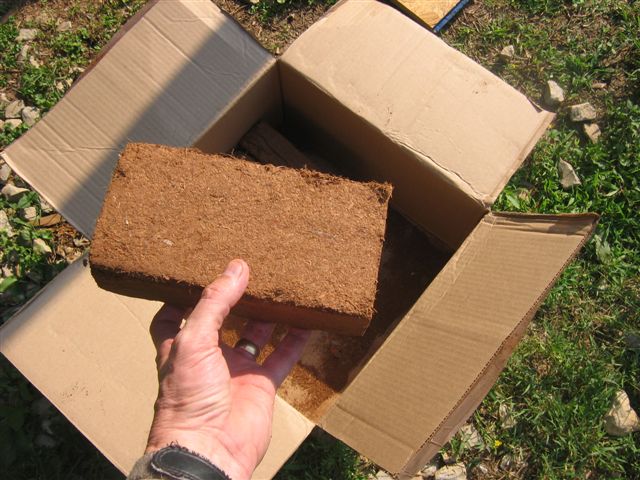
This is a brick of cocoa peat that we ordered off the internet. One brick would break apart and expand and cover nearly a third of a media bed.
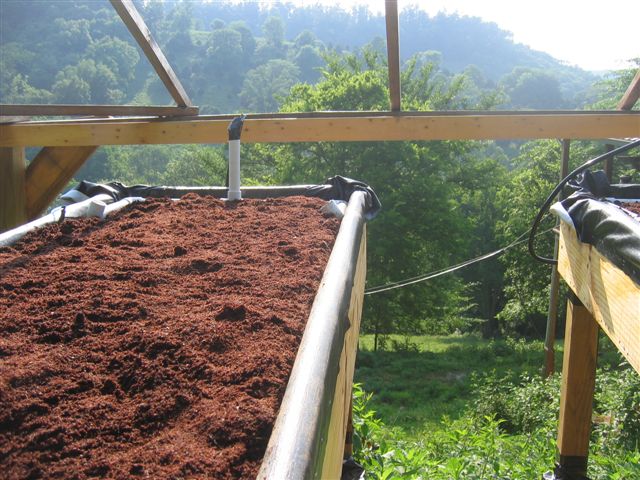
The top media beds were covered in cocoa peat. The water from the fish tank was pumped up into these perforated white pipes to distribute the water evenly. The water pumps ran for 15 minutes every hour to let the water ebb and flow.
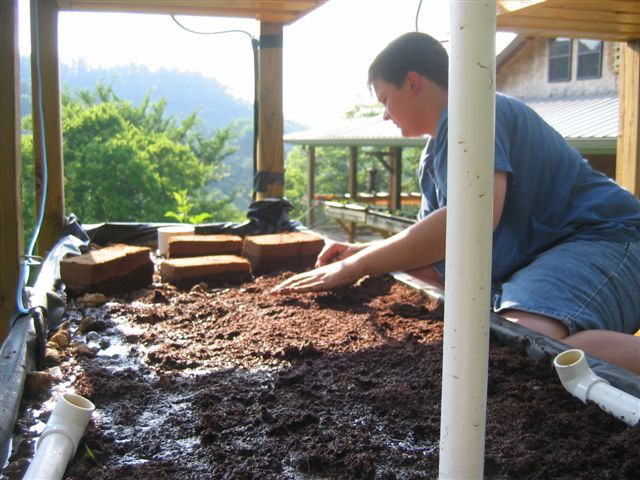
Joseph Hurt breaking up cocoa peat bricks to cover the media beds.
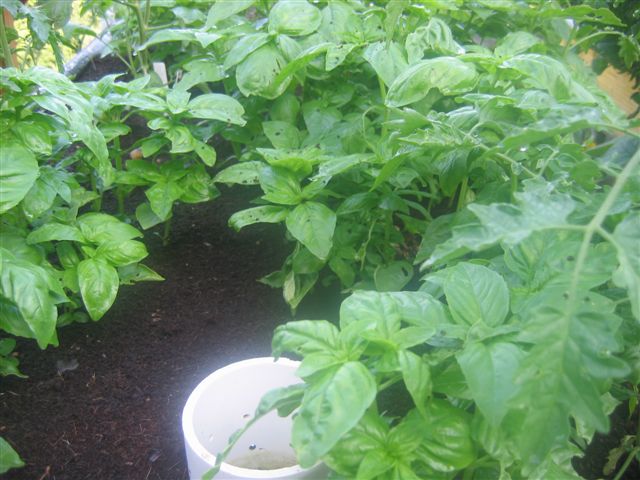
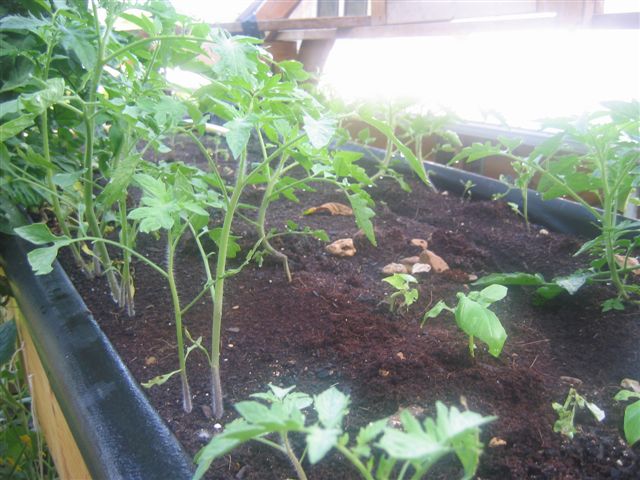
Basil and Tomatoes growing from seed in the cocoa peat. Nearly 100% germination, I have never seen anything like it. The perfect medium
Growing from seed in cocoa peat with ebb and flow water from fish tank.
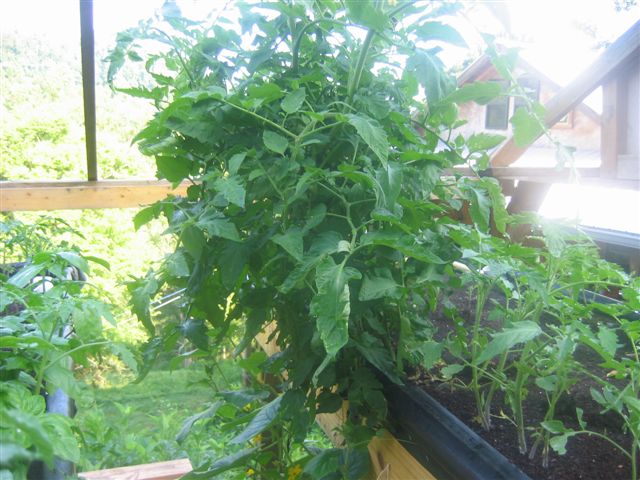
Tomatoes!
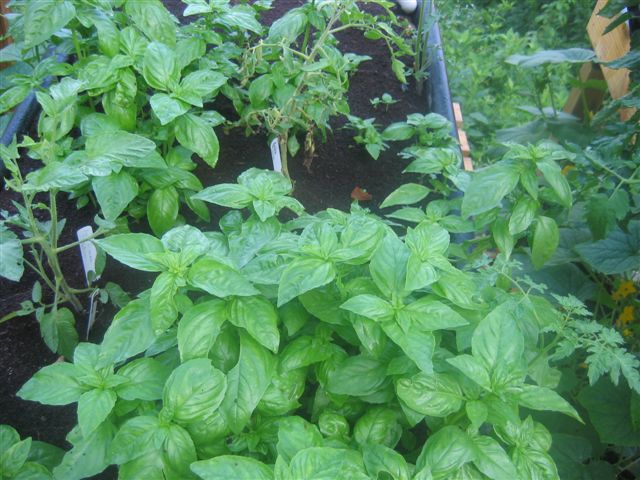
Basil!
Media beds and fish tank.
Gravel media bed during 15 minute water pump cycle.
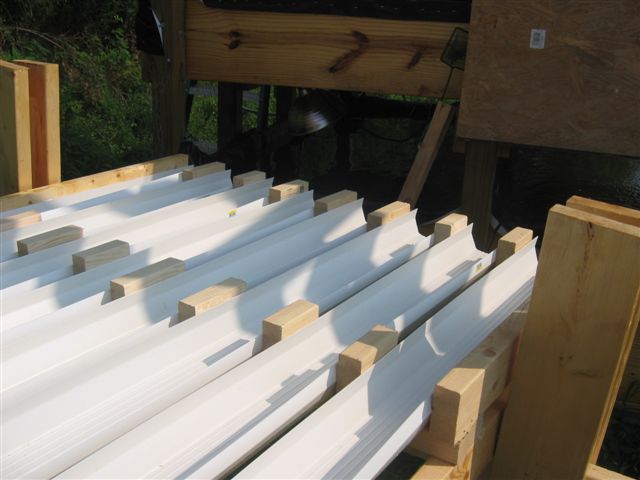
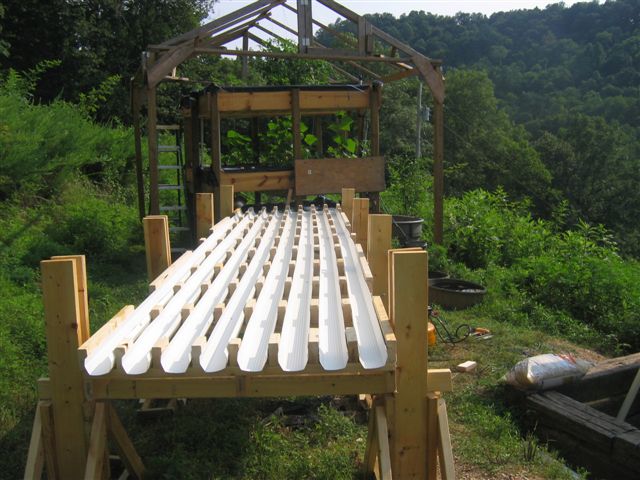
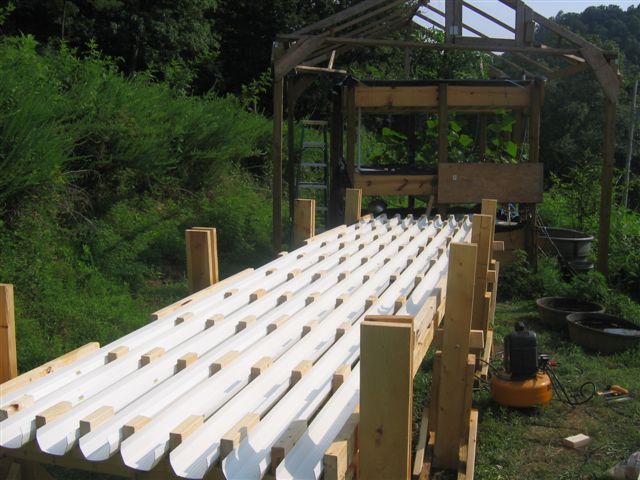
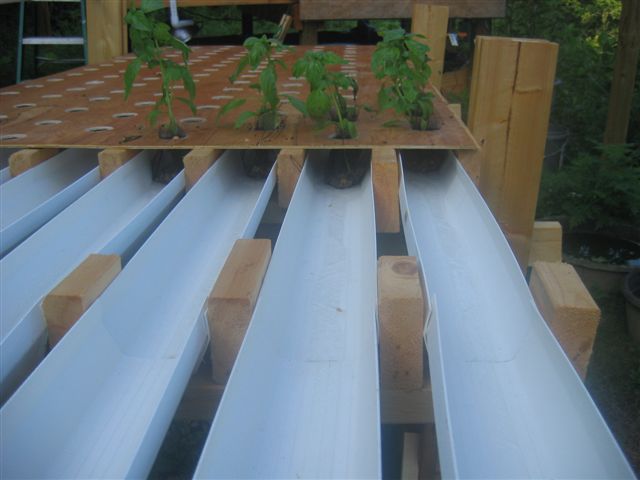
We needed more room for plants, so we added 8 gutters for Nutrient Film Technique (NFT).
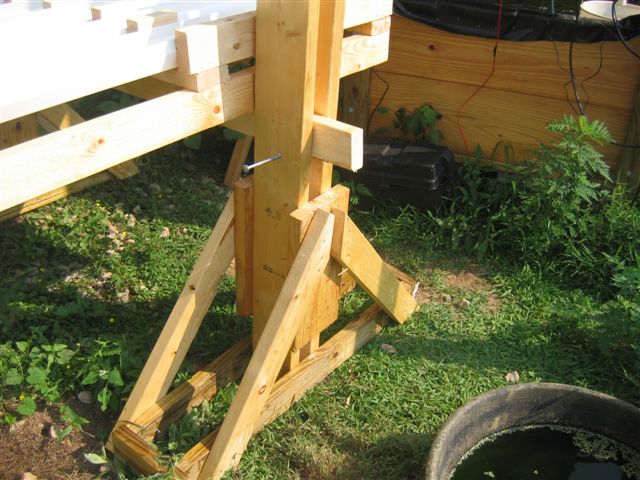
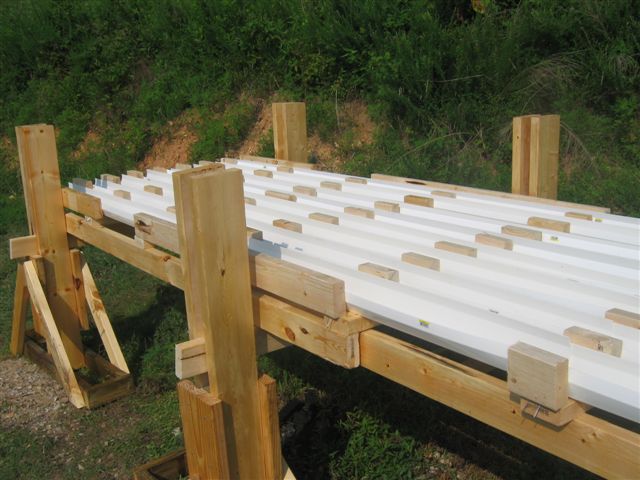
NFT setup on wooden adjustable stands. We used a 20:1 drop to keep the water in the gutters moving towards the fish tanks
We drilled a hole in the stands for a carriage bolt to hold the cross piece to support the stands.
By raising or lowering where the carriage bolt hole was drilled, we could level the support stand and enforce the 20:1 drop for the gutters.
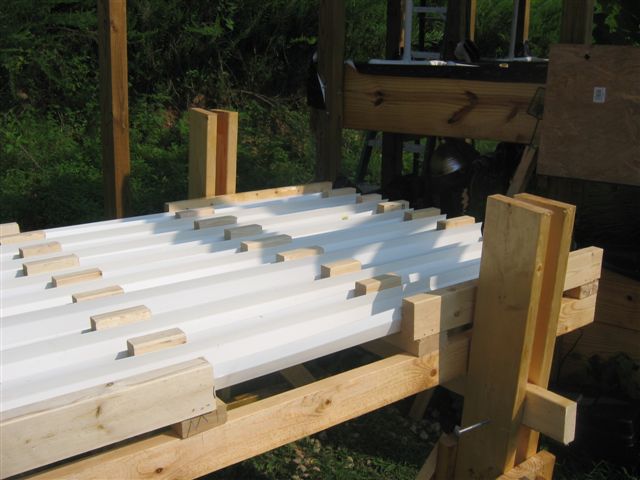
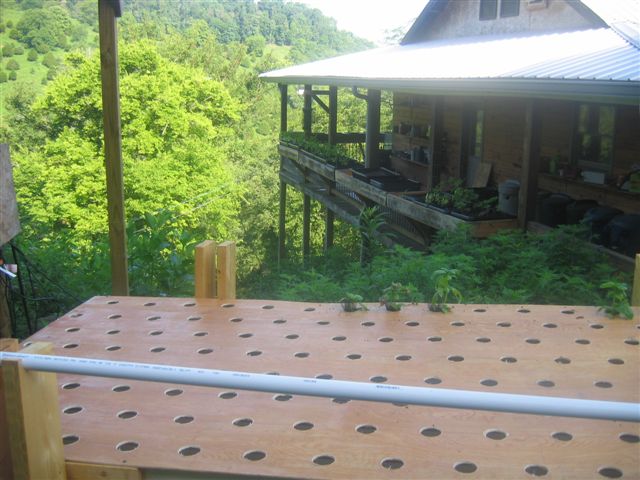
Wooden spacers were added between the gutters to support the thin plywood sheets with holes that would hold the plants and keep the sunlight from making algae in the gutters.
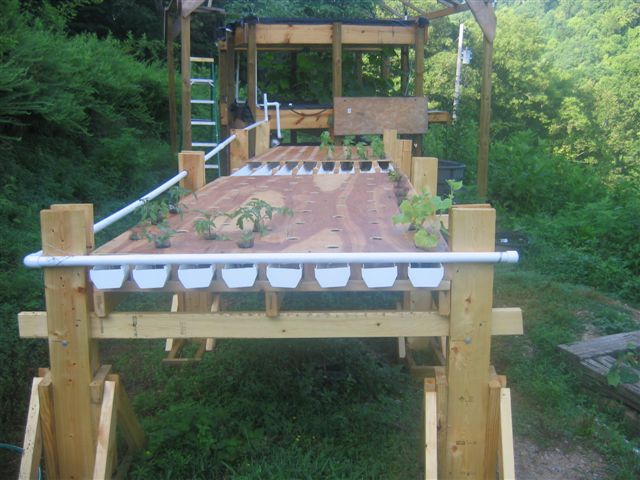
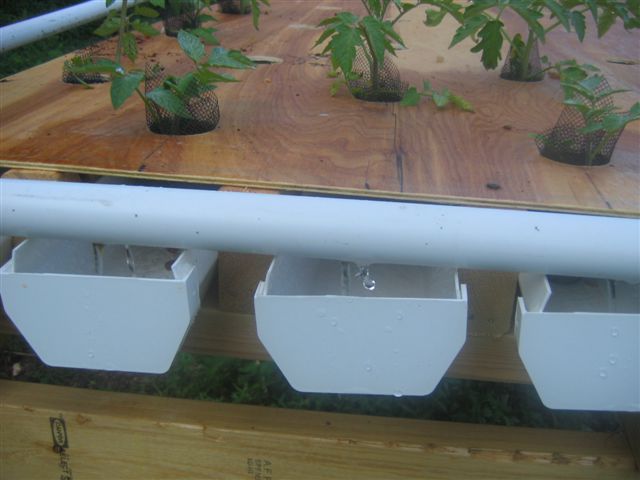
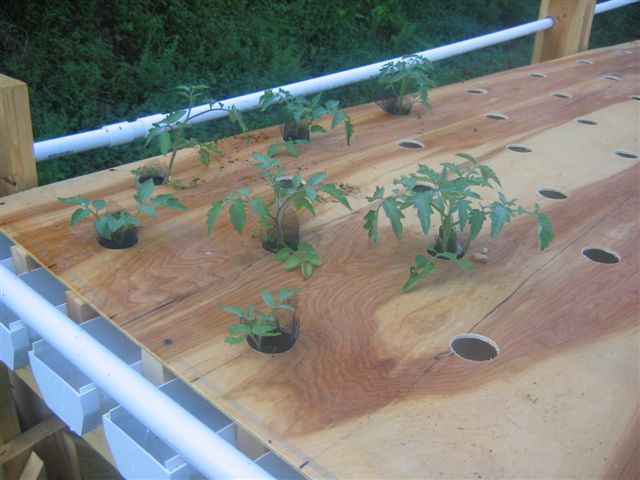
Plywood sheets with holes for the plants. The plants were taken from the cocoa peat with bare roots and placed in a small bag of fiberglass netting with pea gravel instead of soil. The pea gravel netting bag was placed in the gutters which provided water and nutrients to the plant roots. The plywood sheets sheltered the roots from the rays of the sun. The water was pumped from the fish tank through the white PVC pipes to begin the flow through the gutters.
A hole was drilled in the bottom of the PVC water pipes to let the water into each gutter.
This grew tomatoes and basil very well. Peppers did not do so well with the NFT setup.
You can see the bags made from fiberglass netting and pea gravel below the plants.
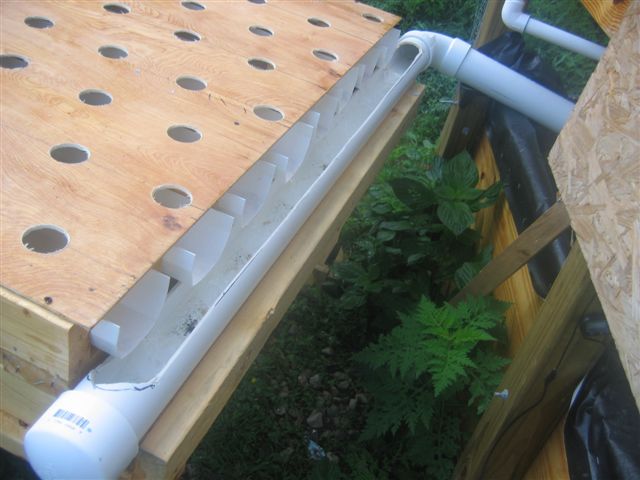
This is how the water was collected from the NFT gutters and returned to the fish tanks.
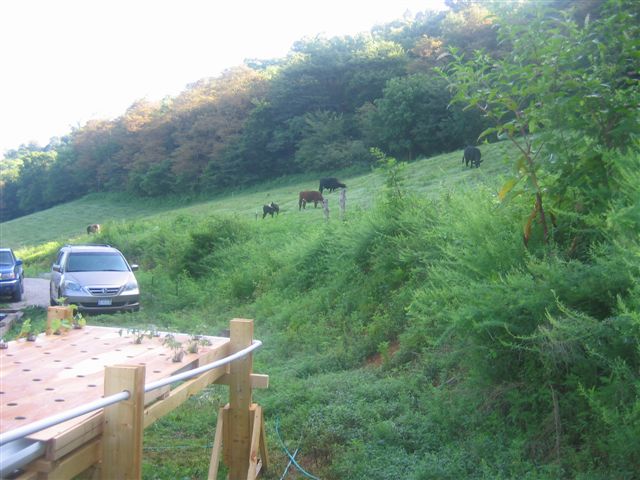
We also raised Hereford and Black Angus cattle in 2011, along with St. Croix sheep.
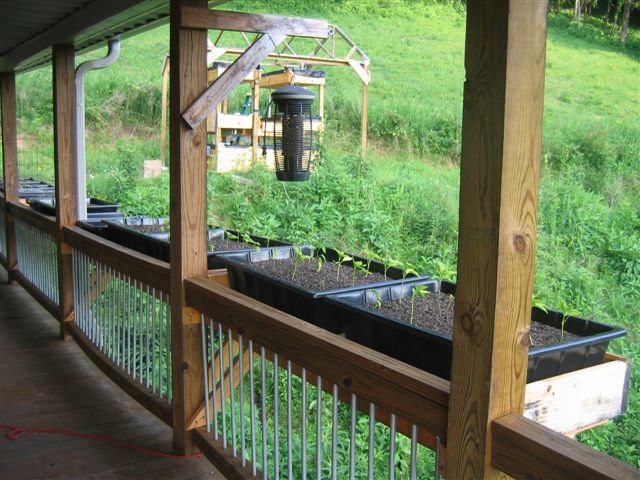
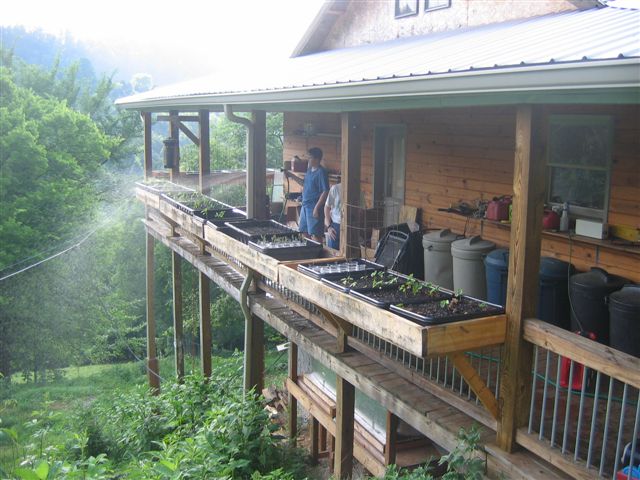
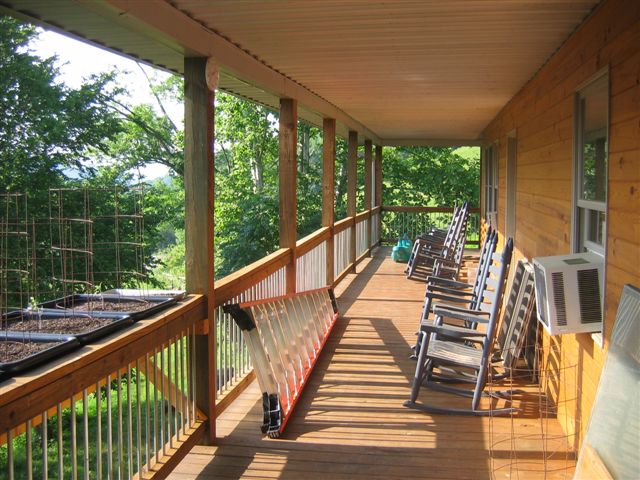
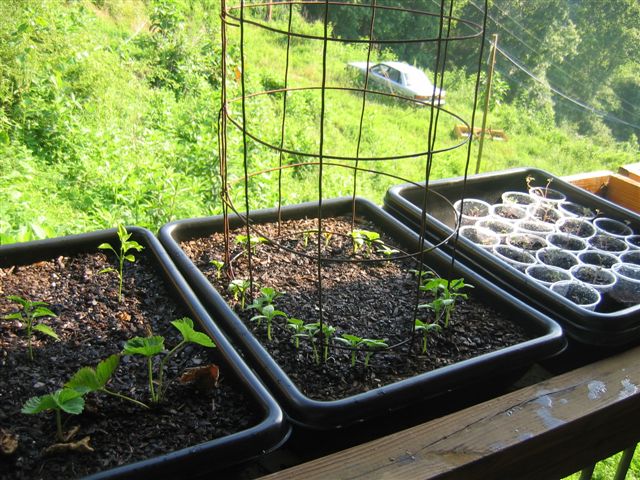
Another view of the NFT, with hanging soil beds off the back porch railing in the background.
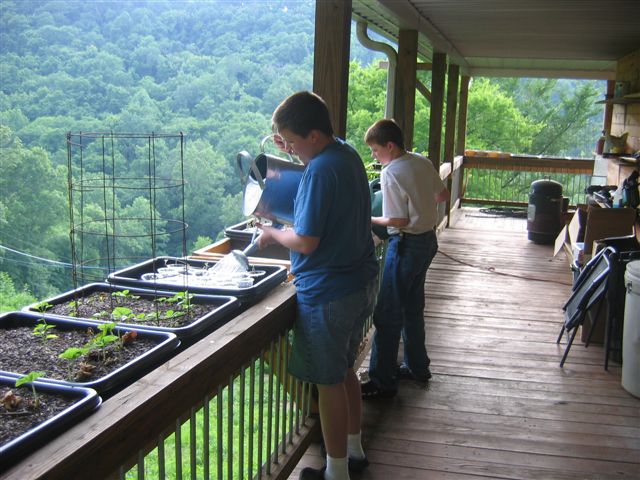
This suspended growing beds made it very easy to take care of the plants.
Our problem was our well water, which had methane in it, and would kill the plants. This is before we did our rainwater harvesting. We had to let the well water sit out for 2 days before we could use it. Joseph and Jacob Hurt in 2011.
Out of desperation and lack of water, we would have to spray our well water on the plants, and this doomed the enterprise.
West side of the house.
Still, it was a great idea.
|